Machine Safety Risk Assessments for Automation & robotics
Identify Machine Hazards Before They Cause Injuries or Costly Retrofits

Machine safety risk assessments help manufacturers identify hazards associated with industrial machinery, robotics, and automated production equipment before injuries occur or expensive retrofits become necessary. Many machines contain hazards such as rotating components, pinch points, cutting tools, and automated movement that can expose employees to serious injury if proper safeguards are not in place.
A structured machine safety risk assessment evaluates how employees interact with equipment, identifies hazardous machine motion, and determines where engineering safeguards or safety controls are required. Vector Safety works with manufacturers across the United States to identify hazards early and implement practical solutions that protect employees while maintaining production efficiency.
ANSI B11 Machine Safety Risk Assessment Methodology

Vector Safety performs machine safety risk assessments using recognized industry standards including ANSI B11 machine safety standards and internationally accepted risk assessment methodologies used throughout modern manufacturing environments.
These assessments evaluate several important factors including:
• Severity of potential injury
• Frequency and duration of employee exposure
• Probability that a hazardous event could occur
These factors help determine the appropriate safeguarding measures and identify whether engineering controls such as fixed guards, safety fencing, interlocked access gates, presence sensing devices, or safety control systems are required.
ANSI B11 standards provide a structured framework for identifying hazards, evaluating risk levels, and determining practical risk reduction methods for industrial machinery and automated systems.
Robotic System Risk Assessments Using ANSI/RIA R15.06
Evaluate Automation and Robotics Before Purchasing Equipment
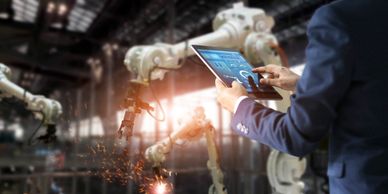
Industrial robots introduce unique hazards that must be carefully evaluated to ensure employees are protected from hazardous robot motion.
Vector Safety performs robotic system risk assessments using ANSI/RIA R15.06, the primary safety standard governing industrial robot systems in the United States.
Robotic risk assessments evaluate factors such as robot motion envelopes, operator interaction zones, tooling hazards, and potential access points into robotic work cells. These evaluations determine the appropriate safeguarding measures required to protect employees interacting with robotic systems.
Typical robotic safety solutions may include perimeter safety fencing, interlocked access gates, safety scanners, light curtains, and safety-rated control systems designed to stop hazardous motion when employees enter restricted areas.
Evaluate Automation and Robotics Before Purchasing Equipment
Evaluate Automation and Robotics Before Purchasing Equipment

Many companies invest in robotics and automation systems without fully understanding the safety requirements associated with those systems.
In some cases machines are installed and later discovered to require extensive safety upgrades in order to meet OSHA or industry safety expectations.
Performing a machine safety risk assessment before purchasing equipment allows manufacturers to identify hazards, understand required safeguarding systems, and ask the right technical questions when working with equipment manufacturers, automation integrators, or robotics suppliers.
Vector Safety helps companies evaluate automation systems early in the design or purchasing process so they can make informed decisions and avoid unexpected safety retrofit costs after installation.
Machine Safety Evaluations for Existing Equipment and Legacy Machines

Many manufacturing facilities operate older machinery that was installed before modern safety standards were widely implemented. While these machines may still operate reliably from a production standpoint, they may lack safeguards necessary to protect employees from hazardous machine motion.
Vector Safety performs machine safety evaluations for existing equipment to identify hazards and recommend practical safeguarding improvements. These assessments help facilities prioritize safety upgrades and implement solutions that reduce risk exposure while allowing production equipment to continue operating efficiently.
Legacy equipment can often be upgraded with modern safeguarding solutions such as fixed guards, safety fencing, interlocked access doors, and presence sensing devices.
Work More Effectively with Integrators, Engineers, and Equipment Suppliers

Machine safety risk assessments provide manufacturers with valuable technical information that allows them to work more effectively with automation integrators, engineers, and equipment suppliers.
Understanding the required level of safeguarding helps companies evaluate whether automation systems are designed properly and whether proposed safety systems meet industry expectations.
Risk assessments give manufacturers the knowledge needed to ask better technical questions and ensure that safety is incorporated into equipment design early in the project.
This approach often reduces project delays, prevents expensive redesigns, and improves long-term system reliability.