Robot Cell Safety and Industrial Robot Safeguarding Solution
Protecting Workers from Industrial Robot Hazards
Protecting Workers from Industrial Robot Hazards
Protecting Workers from Industrial Robot Hazards
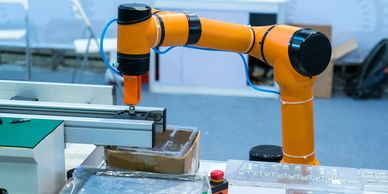
Industrial robots are widely used in modern manufacturing for welding, palletizing, assembly, machine tending, and automated material handling. While robotics greatly improve productivity, they also introduce unique hazards related to robot motion, tooling, and automated equipment.
Robots can move rapidly and unpredictably within their work envelopes, creating risks for employees who may interact with robotic systems during normal operations, maintenance, or troubleshooting.
Without proper safeguarding, employees can be exposed to hazardous motion, crushing hazards, or unexpected robot movement.
Effective robot cell safety systems protect employees while allowing automated systems to operate safely and efficiently.
Robot Safety Requirements Under ANSI/RIA R15.06
Protecting Workers from Industrial Robot Hazards
Protecting Workers from Industrial Robot Hazards
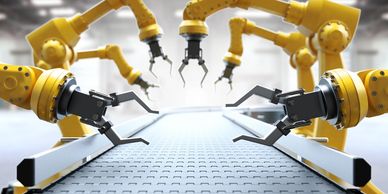
Industrial robot systems should be designed according to recognized safety standards such as ANSI/RIA R15.06, which provides safety requirements for industrial robots and robot systems.
These standards establish guidelines for evaluating hazards associated with robot systems and implementing appropriate safeguarding measures. Robot safety evaluations consider factors such as robot work envelopes, operator interaction zones, tooling hazards, and access points where employees may enter robotic work areas.
Risk assessments are used to determine the appropriate safeguarding methods needed to protect employees interacting with robotic systems.
Robot Cell Guarding and Safety Fencing Systems
Protecting Workers from Industrial Robot Hazards
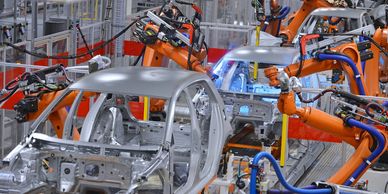
Robot cells are commonly protected using physical guarding systems designed to prevent employees from entering hazardous areas while robots are operating.
These guarding systems typically include safety fencing, interlocked access gates, and protective barriers surrounding robotic work cells.
Interlocked gate systems automatically stop robot motion when access points are opened, preventing employees from entering hazardous areas while robots are operating.
Proper robot cell design ensures that employees can safely interact with robotic systems for maintenance and operational tasks without exposure to hazardous robot motion.
Presence Sensing Devices and Robot Safety Controls
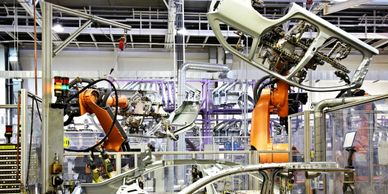
In some robotic applications, presence sensing devices such as safety light curtains, safety scanners, or pressure-sensitive safety mats may be used to protect employees interacting with automated systems.
These devices detect when a person enters a hazardous zone and trigger safety control systems that stop hazardous machine motion. These safety systems are often integrated with safety-rated control systems designed to meet required safety performance levels for industrial equipment.
Selecting the appropriate safeguarding method depends on the application, employee interaction, and the type of robotic system being used.
Robot Safety Risk Assessments for Automated Systems

Machine safety risk assessments are an important part of evaluating robotic systems and determining appropriate safeguarding methods. Risk assessments evaluate the severity of potential injury, frequency of employee exposure, and the probability that a hazardous event could occur.
These evaluations help determine the appropriate safety controls required for robotic systems, including fencing systems, presence sensing devices, safety control systems, and emergency stop functions.
Vector Safety performs robot safety risk assessments to help manufacturers evaluate robotic systems and implement practical safeguarding solutions.
Robot Safety Consulting for Manufacturing and Automation Projects
Vector Safety provides robot safety consulting, machine safety risk assessments, and safeguarding design support for companies implementing robotics and automated production systems.
Our team helps manufacturers evaluate robotic system hazards, implement effective safeguarding solutions, and ensure that robotic cells operate safely within industrial environments.
We work with manufacturers, automation integrators, and engineering teams to improve robotic system safety while supporting efficient automated production operations.